
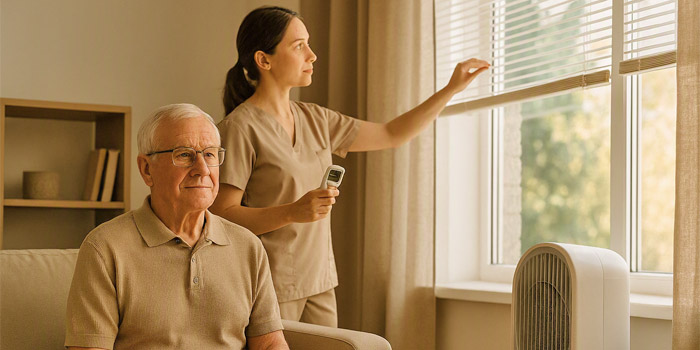
Every summer brings a new wave of record‑breaking temperatures, and while most families worry about sunburn or dehydration, the real danger for older adults is far more serious. Heat affects seniors differently — and more quickly — than it does younger people. Chronic conditions, medications, mobility limitations, and a reduced ability to regulate body temperature all combine to make hot weather a genuine health threat. Families who understand these risks can prevent emergencies long before they happen.
Environmental Control
The first priority is environmental control. Seniors should never be left in a home where temperatures climb above safe levels. Air conditioning is essential, not optional. If the home’s cooling system is unreliable, families should have a backup plan: portable AC units, window units, or temporary relocation to a cooler environment during peak heat. Fans help with comfort but do not prevent heat illness on their own. Check indoor temperatures regularly — don’t rely on a senior’s perception of heat, which can be inaccurate.
Hydration
Hydration is the second major safeguard. Many older adults drink less than they should, either because they don’t feel thirsty or because they want to avoid extra bathroom trips. During heat waves, this becomes dangerous. Families should encourage small, frequent drinks throughout the day: water, electrolyte beverages, or hydrating foods like fruit. Avoid alcohol, which accelerates dehydration and increases heat sensitivity.
Medication Management
Medication management also matters. Some prescriptions — including diuretics, blood pressure medications, and certain heart or psychiatric drugs — make seniors more vulnerable to heat. Families should review medication lists with a pharmacist or clinician at the start of summer to understand how heat may interact with what the senior is taking.
Out-of-house Activities
Daily routines need adjustment as well. Outdoor activities, errands, and appointments should be scheduled early in the morning or later in the evening. Seniors should avoid yard work, long walks, or sitting outdoors during peak heat hours. Even indoor chores can become risky if the home is warm. Light clothing, breathable fabrics, and shaded areas help reduce strain.
Watch for
Finally, families should learn the early signs of heat stress: dizziness, headache, nausea, confusion, rapid heartbeat, or unusual fatigue. These symptoms are subtle at first, but they escalate quickly. If a senior shows any of them, move them to a cool environment immediately and begin hydration. If symptoms worsen, emergency care is necessary.
Extreme heat is not just uncomfortable — it’s a genuine medical risk for older adults. With a few proactive steps, families can keep seniors safe, comfortable, and healthy throughout the hottest months of the year.