
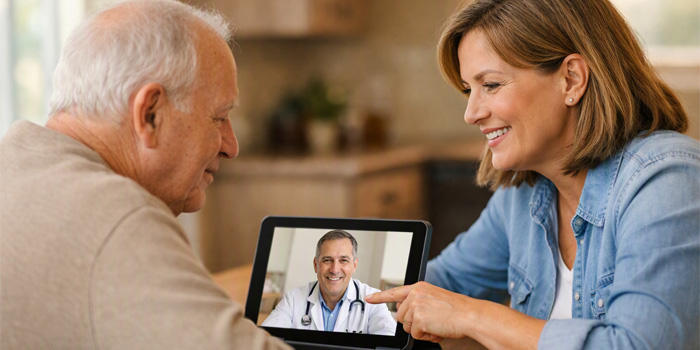
Telehealth has become one of the most helpful tools in modern senior care. It saves travel time, reduces exposure to illness, and makes quick doctor check-ins easier. But for many older adults, the idea of a video appointment can feel confusing, intimidating, or downright stressful. The good news is that with a little preparation, families can turn telehealth from a source of frustration into a smooth, confidence‑building experience.
Start with the “why.”
Before introducing any technology, explain the purpose in simple, reassuring terms. Seniors often resist new tools because they fear being overwhelmed or embarrassed. A calm explanation — “This helps your doctor see you without us having to drive across town” — sets the tone. Emphasize convenience, safety, and the fact that the doctor already expects some technical hiccups.
Choose the simplest device.
Telehealth works on phones, tablets, and computers, but not all devices feel equally friendly. Many seniors do best with a tablet because the screen is large, the buttons are obvious, and the device is comfortable to hold. If the senior already uses a smartphone confidently, stick with that. The goal is familiarity, not perfection.
Prepare the device ahead of time.
Seniors’ biggest frustration is last‑minute scrambling. Families can prevent this by doing a quick “pre‑flight check” the day before the appointment:
- Make sure the telehealth app is installed and updated
- Test the camera and microphone
- Confirm the login information
- Charge the device fully
- Place it in a stable stand so the senior doesn’t have to hold it
This small bit of preparation removes 90% of the stress.
Set up the environment.
A successful telehealth visit depends on more than the device. Seniors need a quiet, well‑lit space where they can hear and be heard. Natural light from a window works beautifully, but a lamp placed behind the device is just as effective. Reduce background noise, turn off the TV, and keep pets out of the room. A comfortable chair with back support helps the senior stay relaxed during the conversation.
Practice before the real appointment.
A five‑minute “mock call” can make all the difference. Let the senior practice answering a video call, adjusting the volume, and seeing themselves on screen. Most older adults don’t need a full tutorial — they just need to know they won’t be alone when the real appointment starts.
Stay nearby during the visit.
Even confident seniors appreciate having a family member close by. You don’t have to appear on camera; simply being present to help with volume or lighting, or to reconnect if the call drops, provides reassurance. If the senior wants you involved in the conversation, sit where the doctor can see you. If not, stay just off‑screen.
End with a quick recap.
After the appointment, summarize what the doctor said. Seniors often focus so hard on the technology that they miss parts of the conversation. A calm recap reinforces telehealth’s value and builds confidence for the next visit.
Telehealth doesn’t have to be complicated. With a little preparation and a supportive environment, families can turn it into a powerful tool that keeps seniors connected, informed, and cared for — without frustration.